Thinking of buying or living in a condo? Learn how strata councils, property managers and good governance affect your rights, comfort and property value in BC.
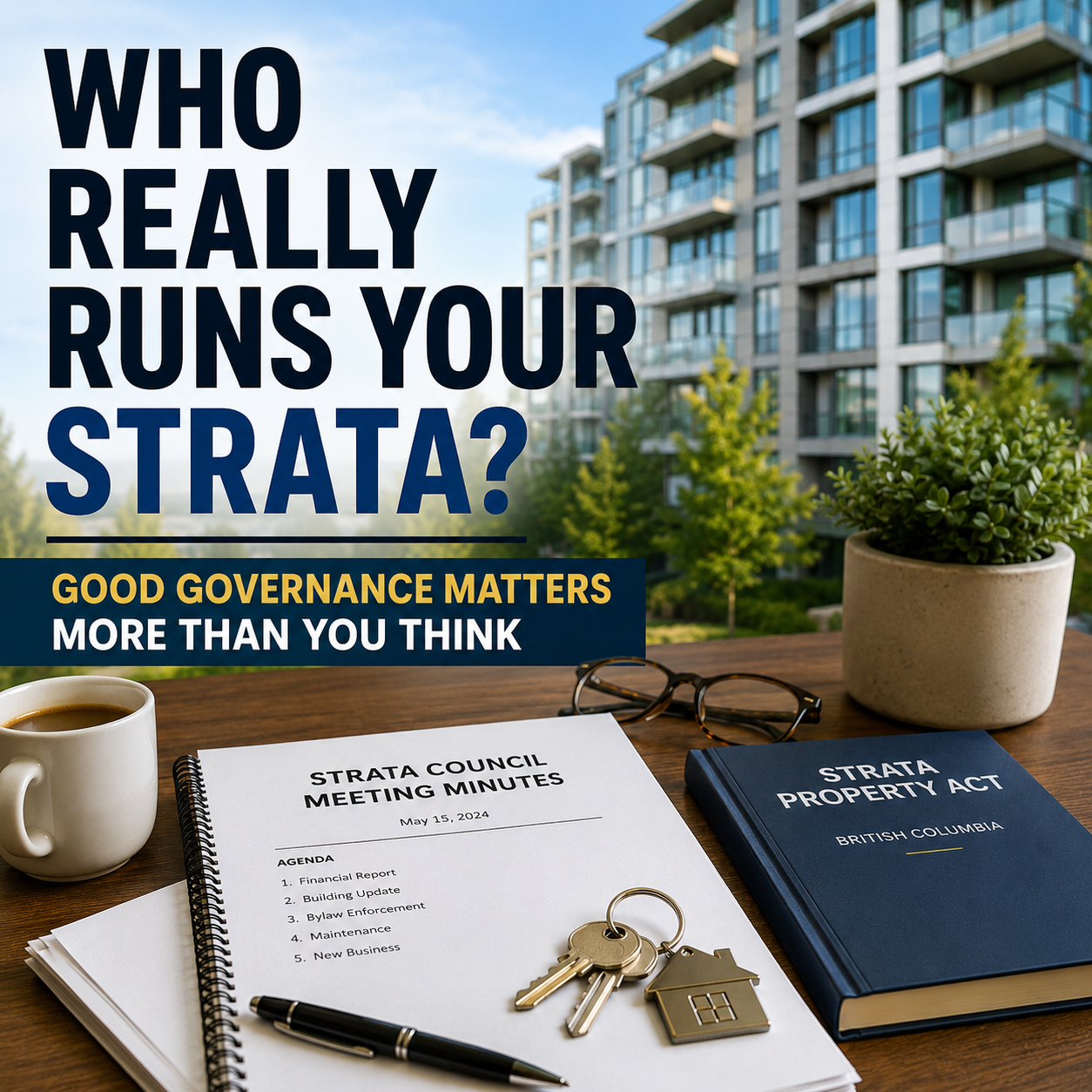
When people buy a condominium, they usually compare location, floor plan, monthly strata fees, parking, storage,and amenities. They may review the depreciation report, glance through a few council meeting minutes and ask whether there are any upcoming special levies.
What many buyers overlook is something that can have just as much impact on their day-to-day life as the home itself:
Over the years, I have reviewed hundreds of strata documents on behalf of buyers throughout Metro Vancouver. While every building has its own personality, one thing has become increasingly clear—good governance creates confidence, while poor governance creates uncertainty.
A beautiful building can become frustrating to live in if decisions are inconsistent, communication is poor or owners lose confidence in how the strata is managed. Likewise, an older building with thoughtful leadership, clear communication and responsible financial planning can become one of the most desirable places to live.
The quality of a strata council rarely appears in a listing description, yet it can influence an owner's experience just as much as the location, amenities, or floor plan.
That distinction is important. Good governance is about protecting the building, reducing risk and preserving property values.
It is NOT about imposing personal preferences. Every decision should answer one simple question:
If the answer is yes, the decision is probably justified. If the answer is based only on someone's opinion, the conversation becomes very different.
An owner wants to install a heat pump.
Someone applies to replace flooring.
Another owner requests permission to install an EV charger.
Someone wants to add privacy screening to a patio.
These requests are becoming more common as buildings age and homeowners look for ways to improve comfort, accessibility, and energy efficiency.
Consider two similar condominium buildings.
In the first building, council has adopted a written policy for heat pump installations. Owners know exactly what documents must be submitted, which engineering standards apply, who pays for maintenance and what restoration obligations exist if repairs are required in the future.
Applications are reviewed consistently, and decisions are communicated within a reasonable timeframe.
In the second building, there is no written policy.
One application is approved.
Another is denied.
A third receives no response for several months.
Owners are left guessing whether the outcome depends on the application—or on who happens to be sitting around the council table. The issue isn't air conditioning. It's consistency.
Owners generally accept decisions they disagree with when they understand the reasoning behind them.
What many buyers overlook is something that can have just as much impact on their day-to-day life as the home itself:
The quality of the strata council.
Over the years, I have reviewed hundreds of strata documents on behalf of buyers throughout Metro Vancouver. While every building has its own personality, one thing has become increasingly clear—good governance creates confidence, while poor governance creates uncertainty.
A beautiful building can become frustrating to live in if decisions are inconsistent, communication is poor or owners lose confidence in how the strata is managed. Likewise, an older building with thoughtful leadership, clear communication and responsible financial planning can become one of the most desirable places to live.
The quality of a strata council rarely appears in a listing description, yet it can influence an owner's experience just as much as the location, amenities, or floor plan.
The Purpose of a Strata Council
Before discussing what can go wrong, it's important to understand what a strata council is supposed to do. A strata council is elected by the owners to manage the affairs of the strata corporation. Its responsibilities include maintaining common property, planning for future repairs, managing finances, enforcing bylaws fairly, obtaining professional advice when needed, and acting in the best interests of all owners.Notice that the role is to govern the property, not to govern how people choose to live their private lives.
That distinction is important. Good governance is about protecting the building, reducing risk and preserving property values.
It is NOT about imposing personal preferences. Every decision should answer one simple question:
Does this protect the building and benefit the community?
If the answer is yes, the decision is probably justified. If the answer is based only on someone's opinion, the conversation becomes very different.
When Governance Becomes Control
Most disputes between owners and strata councils don't begin with major issues. They usually start with something relatively simple.An owner wants to install a heat pump.
Someone applies to replace flooring.
Another owner requests permission to install an EV charger.
Someone wants to add privacy screening to a patio.
These requests are becoming more common as buildings age and homeowners look for ways to improve comfort, accessibility, and energy efficiency.
Consider two similar condominium buildings.
In the first building, council has adopted a written policy for heat pump installations. Owners know exactly what documents must be submitted, which engineering standards apply, who pays for maintenance and what restoration obligations exist if repairs are required in the future.
Applications are reviewed consistently, and decisions are communicated within a reasonable timeframe.
In the second building, there is no written policy.
One application is approved.
Another is denied.
A third receives no response for several months.
Owners are left guessing whether the outcome depends on the application—or on who happens to be sitting around the council table. The issue isn't air conditioning. It's consistency.
Owners generally accept decisions they disagree with when they understand the reasoning behind them.
What creates frustration is inconsistency.
Without them, there would be disputes over noise, parking, renovations, pets, smoking, storage, and the use of common property.
The problem isn't having rules.
The problem is applying them differently depending on the situation.
Imagine two owners replacing flooring with nearly identical materials.
One receives approval after providing the required specifications.
The other is denied without explanation.
OR imagine that one resident receives repeated warning letters for storing items in a parking stall while identical violations elsewhere are ignored.
Whether intentional or not inconsistent enforcement damages confidence.
Owners should never feel that decisions depend on personalities rather than policies.
Good governance doesn't require saying "yes" to every request. It requires applying the same standard to everyone.
Property managers advise the council, coordinate contractors, prepare meeting agendas, assist with legal compliance and implement council decisions.
The elected strata council is responsible for making most governance decisions. This distinction matters because owners often direct their frustration toward the management company when the decision actually came from council. At the same time, effective property managers should provide objective advice—even if it isn't what council members want to hear.
Council members are elected to represent every owner in the building—not to advance personal preferences or create new standards that go beyond the bylaws. Transparency, consistency, and sound judgment are far more valuable than authority.
A good strata council has an obligation to enforce the rules.
The goal is not fewer bylaws; The goal is fair, reasonable and consistent enforcement.
The strongest communities are those where owners respect the rules and councils apply them fairly.
A beautiful kitchen can be renovated.
A view cannot.
And neither can poor governance.
Before purchasing a strata property, I recommend reviewing more than just the financial statements.
Read several council meeting minutes to get a feel for the council and community. How often do council meet? Same members year after year? new bylaws every few months? These should give some clues the kind of community buying into.
Review the bylaws.
Understand upcoming projects. Look for repeated disputes, recurring complaints, legal actions, or unresolved maintenance issues.
Just as importantly, pay attention to how council communicates; Do decisions appear thoughtful and consistent? Are owners informed? Does council explain why decisions are being made?
These details rarely make headlines, yet they can significantly influence your ownership experience.
Good governance protects more than buildings. It protects confidence.
Buildings known for transparent leadership, proactive planning and respectful communication often attract stronger buyer interest than those with a reputation for ongoing conflict.
Read the bylaws carefully. Ask council to identify the specific bylaw or policy supporting its decision.
Submit complete information if requesting approval for a renovation or improvement. Ask whether similar requests have been approved previously.
Keep communication respectful and in writing. Most disagreements can be resolved through constructive dialogue.
When they cannot, owners have options such as mediation, legal advice or the Civil Resolution Tribunal. Escalation should be the last step—not the first.
Council members volunteer their time to make decisions on behalf of the community.
Property managers provide professional guidance and help implement those decisions.
When each group understands its role, strata living works remarkably well.
The best councils don't ask, "Can we say no?"
Ultimately, good governance isn't measured by the number of warning letters issued or applications denied. It's measured by whether owners trust the process, understand the decisions being made, and believe they are being treated fairly. Because at the end of the day, buying a condominium isn't just buying four walls. You're buying into a community.
Fairness Builds Confidence
Rules are essential in any shared community.Without them, there would be disputes over noise, parking, renovations, pets, smoking, storage, and the use of common property.
The problem isn't having rules.
The problem is applying them differently depending on the situation.
Imagine two owners replacing flooring with nearly identical materials.
One receives approval after providing the required specifications.
The other is denied without explanation.
OR imagine that one resident receives repeated warning letters for storing items in a parking stall while identical violations elsewhere are ignored.
Whether intentional or not inconsistent enforcement damages confidence.
Owners should never feel that decisions depend on personalities rather than policies.
Good governance doesn't require saying "yes" to every request. It requires applying the same standard to everyone.
Who Actually Makes the Decisions?
One of the biggest misconceptions in strata living is that the property manager runs the building. In most cases, they don't.Property managers advise the council, coordinate contractors, prepare meeting agendas, assist with legal compliance and implement council decisions.
The elected strata council is responsible for making most governance decisions. This distinction matters because owners often direct their frustration toward the management company when the decision actually came from council. At the same time, effective property managers should provide objective advice—even if it isn't what council members want to hear.
Likewise, serving on council does not give members unlimited authority.
Council members are elected to represent every owner in the building—not to advance personal preferences or create new standards that go beyond the bylaws. Transparency, consistency, and sound judgment are far more valuable than authority.
Not Every Owner Is Right
Balance is important. Owners also have responsibilities; some complete renovations without approval, some ignore noise bylaws, others expect exceptions that would never be granted to anyone else.A good strata council has an obligation to enforce the rules.
The goal is not fewer bylaws; The goal is fair, reasonable and consistent enforcement.
The strongest communities are those where owners respect the rules and councils apply them fairly.
Why Buyers Should Care
As a REALTOR®, I encourage every buyer to look beyond the unit itself.A beautiful kitchen can be renovated.
A view cannot.
And neither can poor governance.
Before purchasing a strata property, I recommend reviewing more than just the financial statements.
Read several council meeting minutes to get a feel for the council and community. How often do council meet? Same members year after year? new bylaws every few months? These should give some clues the kind of community buying into.
Review the bylaws.
Understand upcoming projects. Look for repeated disputes, recurring complaints, legal actions, or unresolved maintenance issues.
Just as importantly, pay attention to how council communicates; Do decisions appear thoughtful and consistent? Are owners informed? Does council explain why decisions are being made?
These details rarely make headlines, yet they can significantly influence your ownership experience.
Good governance protects more than buildings. It protects confidence.
Buildings known for transparent leadership, proactive planning and respectful communication often attract stronger buyer interest than those with a reputation for ongoing conflict.
What Owners Can Do
If you believe a council decision is unreasonable, begin with facts rather than frustration.Read the bylaws carefully. Ask council to identify the specific bylaw or policy supporting its decision.
Submit complete information if requesting approval for a renovation or improvement. Ask whether similar requests have been approved previously.
Keep communication respectful and in writing. Most disagreements can be resolved through constructive dialogue.
When they cannot, owners have options such as mediation, legal advice or the Civil Resolution Tribunal. Escalation should be the last step—not the first.
Final Thoughts
Living in a strata community requires compromise. Owners agree to live within a shared framework of rules designed to protect everyone's investment.Council members volunteer their time to make decisions on behalf of the community.
Property managers provide professional guidance and help implement those decisions.
When each group understands its role, strata living works remarkably well.
The best councils don't ask, "Can we say no?"
They ask, "How can we protect the building while allowing owners to enjoy their homes?"
Ultimately, good governance isn't measured by the number of warning letters issued or applications denied. It's measured by whether owners trust the process, understand the decisions being made, and believe they are being treated fairly. Because at the end of the day, buying a condominium isn't just buying four walls. You're buying into a community.
And the quality of that community often depends on the quality of the governance behind it.
