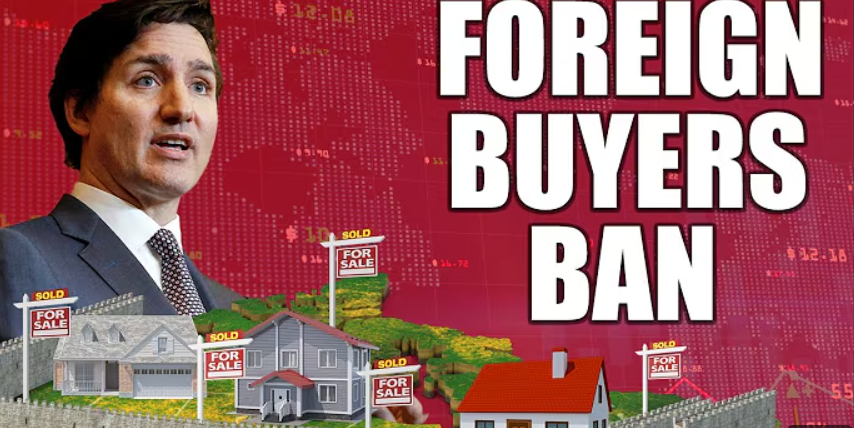
On January 1, 2027, Canada's foreign buyer ban is scheduled to expire.
So what happens next? Should Canada extend it? Let it expire? Or replace it with something more targeted?
The ban was introduced in 2023 to reduce foreign demand for Canadian housing and improve affordability for Canadians. Four years later, there is a much bigger question worth asking: Did the ban actually make Canadian housing more affordable?
I don't think that question has an easy answer. But it may be time to ask a better one.
Maybe the policy should be:
Australia has moved in that direction. Should Canada?
Or should the ban simply remain?
And what about B.C.'s 20% foreign buyer tax?
I'd be interested to hear where you land. No pond intended !
There is a big difference between a foreign investor purchasing an existing Vancouver home and investing in a project that creates 100 new homes.
One adds another buyer to the existing housing supply.
The other potentially adds to the supply.
That distinction could be important as Canada decides what to do in 2027.
Australia offers an interesting example. Its current framework generally restricts foreign purchases of established homes while allowing foreign investment in new dwellings and certain development opportunities, subject to approval and conditions. Foreign investors can also purchase vacant residential land for development, subject to requirements around construction.
Could Canada take a similar approach?
* a new presale condominium
* a newly constructed home
* purpose-built rental housing
* a development project that adds significant new housing
* certain development land, subject to actually building
But could not simply purchase an existing Vancouver house or condo and compete directly with Canadian buyers.
That is a very different policy from simply saying foreign buyers are either allowed or banned. It asks a more practical question:
Does the investment create housing, or simply compete for housing that already exists?
Don't compete with Canadians for the homes that already exist. Help build more homes.
Australia has moved in that direction. Should Canada?
Or should the ban simply remain?
And what about B.C.'s 20% foreign buyer tax?
I'd be interested to hear where you land. No pond intended !
What if the question isn't who can buy, but what they can buy?
There is a big difference between a foreign investor purchasing an existing Vancouver home and investing in a project that creates 100 new homes.
One adds another buyer to the existing housing supply.
The other potentially adds to the supply.
That distinction could be important as Canada decides what to do in 2027.
Australia offers an interesting example. Its current framework generally restricts foreign purchases of established homes while allowing foreign investment in new dwellings and certain development opportunities, subject to approval and conditions. Foreign investors can also purchase vacant residential land for development, subject to requirements around construction.
Could Canada take a similar approach?
What if foreign capital helped build the housing we say we need?
Imagine a system where a non-Canadian could invest in:* a new presale condominium
* a newly constructed home
* purpose-built rental housing
* a development project that adds significant new housing
* certain development land, subject to actually building
But could not simply purchase an existing Vancouver house or condo and compete directly with Canadian buyers.
That is a very different policy from simply saying foreign buyers are either allowed or banned. It asks a more practical question:
Does the investment create housing, or simply compete for housing that already exists?
And this is where Vancouver gets interesting
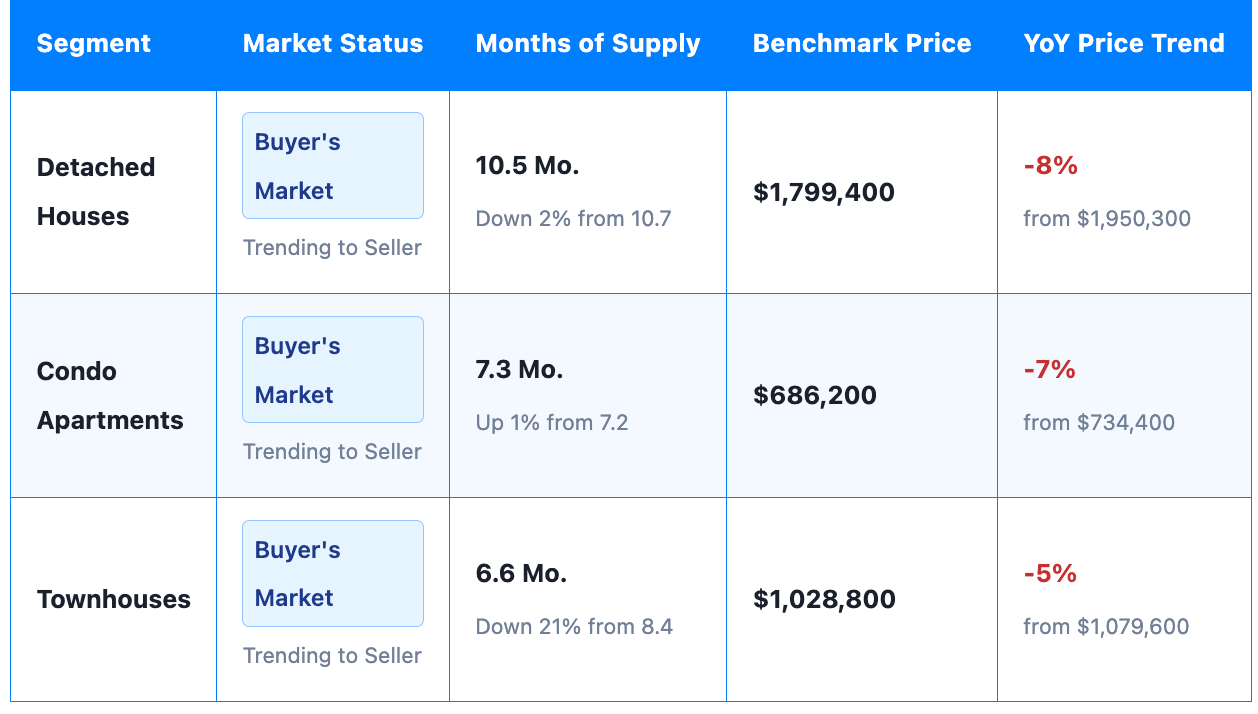
CMHC's latest research continues to identify a significant housing supply gap in Vancouver.
At the same time, condominium construction has weakened considerably. CMHC reported that Vancouver-area condo apartment starts fell 40% in the first half of 2026 compared with the same period a year earlier. Purpose-built rental now represents a much larger share of construction than it did a decade ago.
Canada is restricting certain foreign demand for existing housing while the supply of new ownership housing is becoming more challenging to build. So perhaps the conversation should not simply be about foreign buyers.
Perhaps it should be about foreign capital and housing supply.
What about B.C.'s 20% tax?
Even if the federal ban expires, B.C. has another tool.
In specified areas, foreign nationals, foreign corporations and certain taxable trustees can face an additional property transfer tax of 20% on their proportionate share of a residential property's fair market value.
So if the federal ban disappears, should B.C. keep the 20% tax?
There is an argument for doing so.
But there is also a question worth asking.
Should the same 20% tax apply to a foreign purchaser buying an existing Vancouver home as it does to foreign capital entering a project that will create hundreds of new homes?
Perhaps those are not the same thing.
What about a $4 million threshold?
This is where I am less certain.
One possible approach would be to allow non-Canadians to purchase properties above a certain value, perhaps $4 million.
But why $4 million? A $4 million Vancouver house is still an existing home.
If the objective is affordability, allowing foreign buyers to compete for expensive existing homes simply because they are expensive may be difficult to justify. On the other hand, luxury real estate is a different segment of the market and may have different economic effects. So perhaps price isn't the best dividing line.
Perhaps the better dividing line is whether the investment adds housing.
Then there is the development question
The prohibition does not apply to vacant land, and there are circumstances where non-Canadians can acquire residential property for development purposes. The federal rules also do not apply in the same way to properties outside census metropolitan areas and census agglomerations.
That means the current system isn't really as simple as "foreign buyers cannot buy Canadian real estate.
There are exceptions, different property types and different geographic rules.
And that raises another question for B.C.
If foreign capital can participate in certain development opportunities, why shouldn't the policy be designed around the result of the investment? If a foreign investor buys land and creates 100 homes, that is very different from buying an existing home and taking one more property off the market.
So what should Canada do in 2027?
There are three obvious choices.
Extend the ban.
Continue restricting foreign purchases of certain residential properties.
Let it expire.
Allow foreign buyers to participate more broadly, subject to provincial taxes and other rules.
Replace it with a targeted system.
Restrict foreign purchases of existing housing while allowing foreign investment into new construction and projects that demonstrably increase housing supply.
None of these approaches is without trade-offs.
And that is why I think the 2027 decision deserves more than another argument about whether foreign buyers are good or bad.
The bigger question
Canada has a housing shortage.
Vancouver has a housing shortage.
We need more right homes.
So I keep coming back to one question:
If Canada neds more housing, should we really care where the capital comes from if that capital helps create the housing we need?
